
Alpha-gal Syndrome Hotspots
Are you at risk?
Alpha-gal syndrome in the U.S.
Key statistics for high-prevalence areas
Are you and your family at risk?
Alpha-gal syndrome (AGS) is found on every continent except Antarctica, but cases are not evenly distributed across the globe. Cases are concentrated in regions where the ticks responsible for AGS are most prevalent and where human exposure is highest, including parts of the United States, Europe, Asia, Australia, and Africa.
People who live in rural areas and who work or spend time outdoors are also at heightened risk of developing AGS.
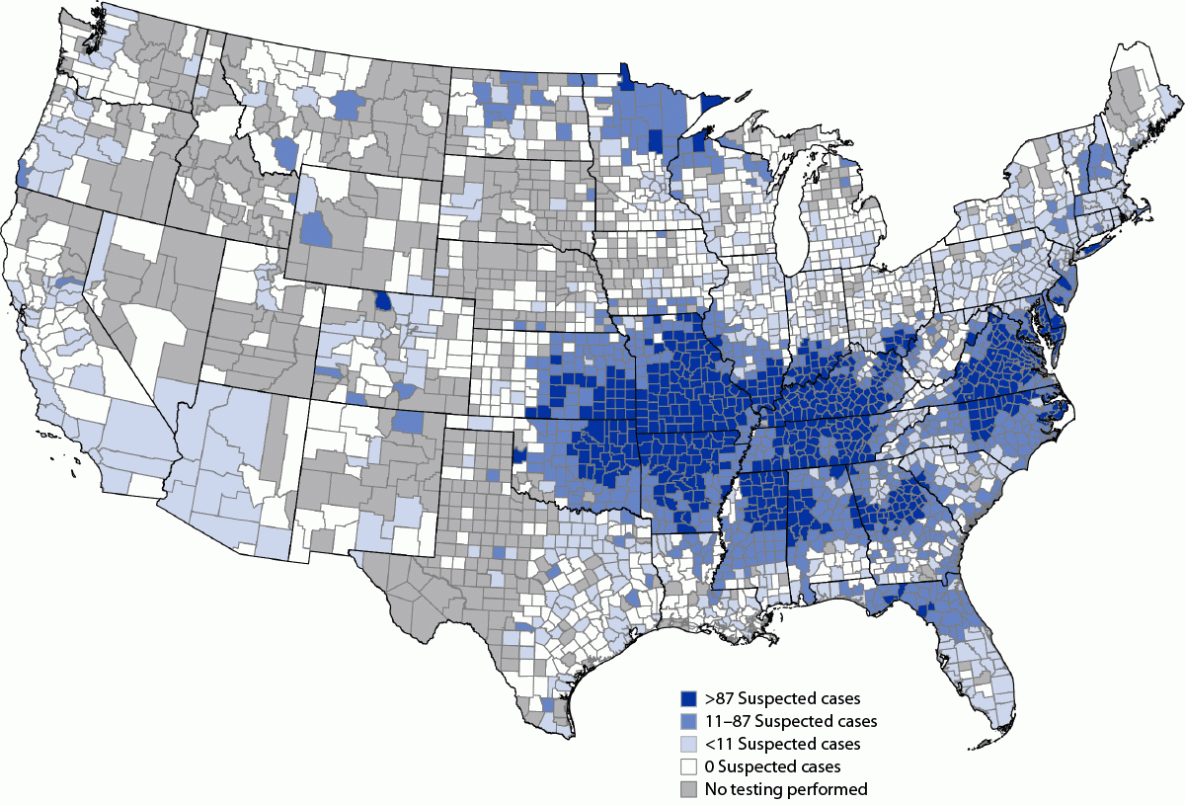
This is a map of self-reported cases. It cannot be used to estimate case numbers, but it does offer some insight into the distribution of diagnosed cases.
Alpha-gal syndrome in the U.S.
In the United States, alpha-gal syndrome is concentrated in the southern, midwestern, and mid-Atlantic regions. In the hardest-hit regions, up to 3% of the population may be affected.
As lone star tick populations continue to grow and spread further north and west, AGS is no longer confined to historically affected regions. New areas are seeing cases for the first time, making AGS an emerging concern well beyond its traditional geographic footprint.
Key statistics for high-prevalence areas

#1 vector-borne disease
In states where lone star ticks are common, alpha-gal syndrome can account for more cases of vector-borne disease than all other vector-borne diseases combined.

#1 cause of adult-onset allergy
Alpha-gal syndrome is the number one cause of adult-onset allergy in high-prevalence areas.

#1 cause of anaphylaxis
Alpha-gal syndrome can be the number one cause of adolescent and adult anaphylaxis in high-prevalence areas.

3% or more affected
3% or more of some populations are affected.